-
Most customers qualify for a $1,425 rebate through Focus On Energy*
*Wisconsin homes only — not available in Illinois
Older homes · Southern Wisconsin
Most Wisconsin homes from that era were built with nothing between the siding and the plaster — or with insulation that settled, sagged, or was never finished. You can’t see it. But you’ve been paying for it every winter.
A free Cozy Walls estimate includes a thermal look at your walls. You’ll know before you spend a dollar.
You don’t need to open a wall to find out. If two or three of these sound like your house, the walls are the problem:
After hundreds of Wisconsin walls, it comes down to three situations.
Common in homes built before the mid-1960s. Siding, sheathing, an empty cavity, plaster. The wall insulates about as well as a window.
Blown in decades ago, it packs down over time and leaves a gap at the top of every stud bay — exactly where the heat leaves. It also holds moisture.
Fiberglass that stops short of the top plate, was cut around wiring, or was left out of hard-to-reach bays. Half a wall insulated is a cold wall.
At the estimate, Erik walks the outside of the house with a thermal camera. Empty cavities and settled cellulose show up as cold stripes between the studs — you can see them on the screen with him. On whole-home jobs we also run a blower-door test that puts a hard number on how much air the house is leaking, and we run it again after the job so you can see exactly what changed.
If your walls are already full, we’ll tell you. We’d rather lose the job than fill a wall that doesn’t need it.
Real jobs this month. One row of siding off, a grid of small holes, foam in, siding back on.
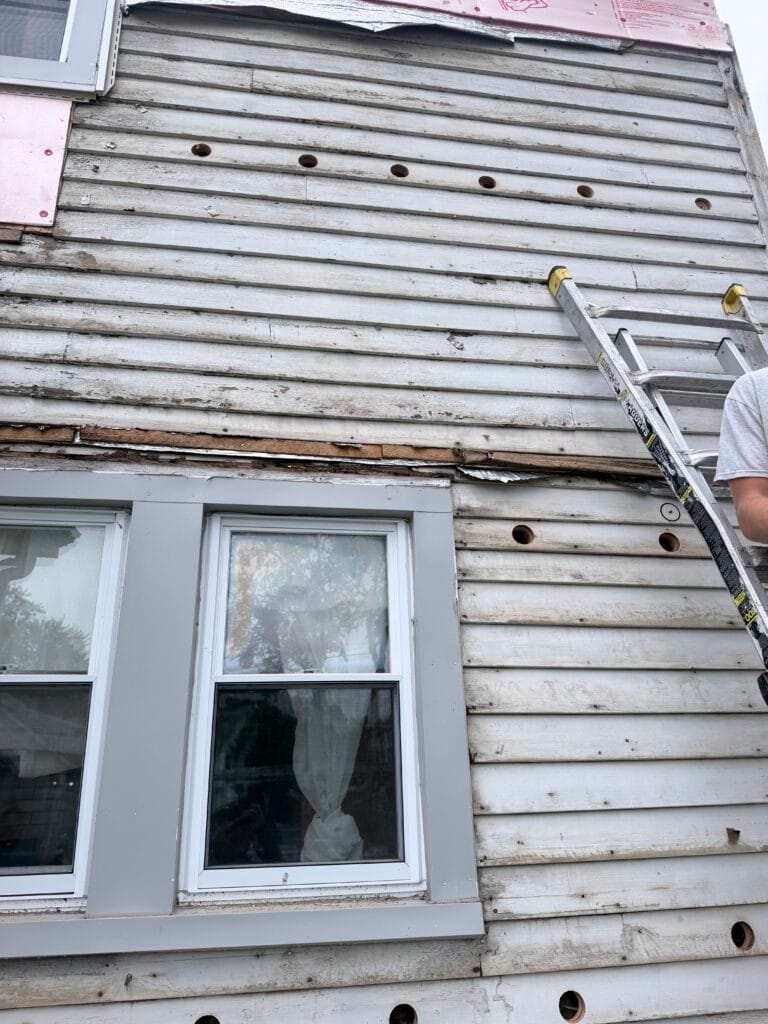
This is as far as we open the house. Nothing inside is touched.
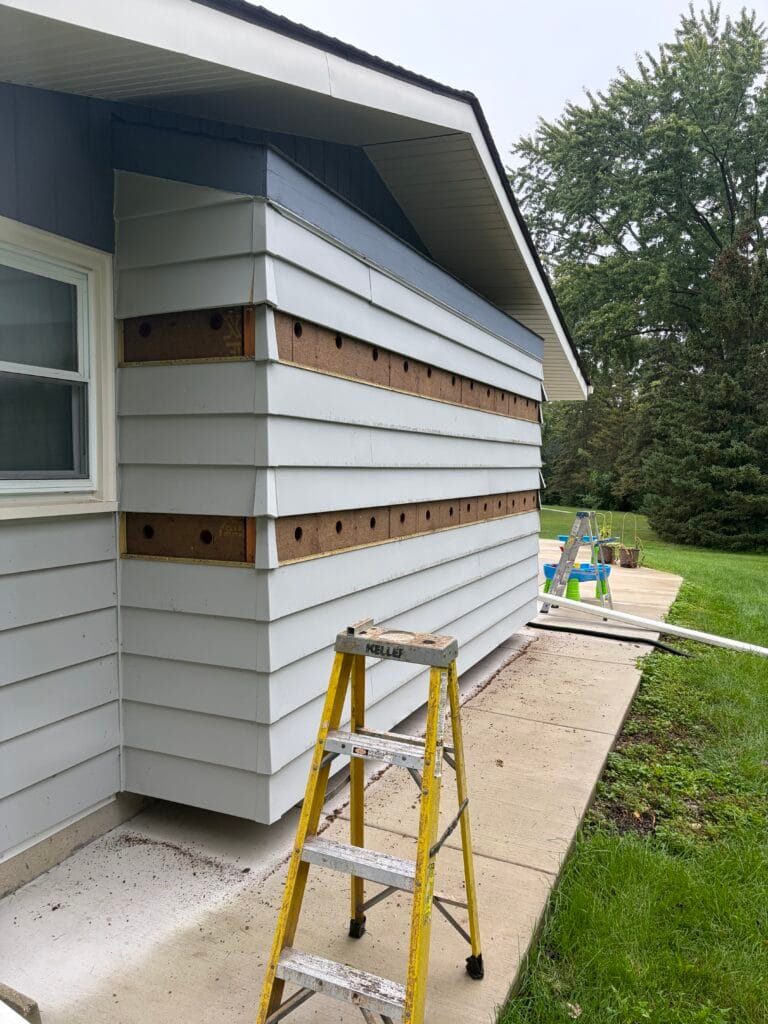
One hole per stud bay, sized to the injection nozzle.
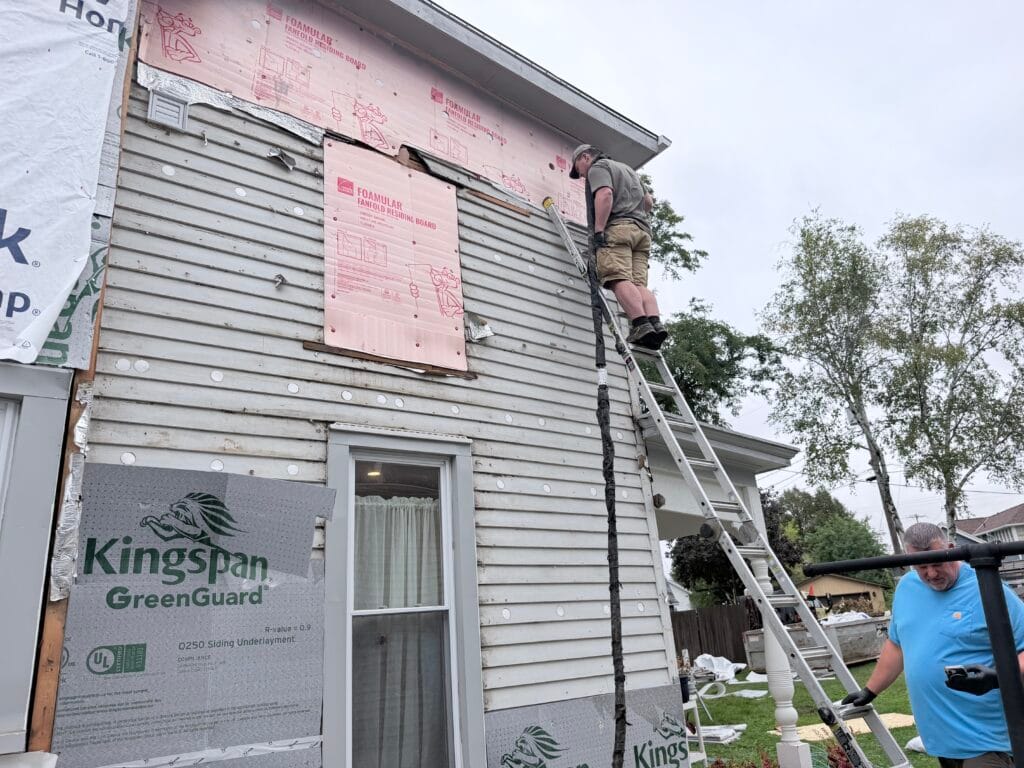
Foam flows around wiring and blocking until the bay is packed top to bottom.
Injection foam is the only way to fully insulate a closed wall without tearing it open. It flows into the cavity as a liquid, expands to fill every gap around wiring and blocking, and cures in place — it doesn’t settle, and it seals air leaks as it goes, which cellulose and batts never do. The result is a wall that holds heat and blocks sound the way a modern wall does.
And it’s the one home-improvement project that pays you back three ways at once: lower heating and cooling bills every month, a $1,425 Focus on Energy rebate check* mailed to you, and a house that’s finally comfortable in every room.
*Focus on Energy is a Wisconsin program. Rebates are not available on Illinois homes.
Erik brings the thermal camera. You get a straight answer and a written number.
Name, phone, best time to call — and the year your house was built if you know it.